Why Choose USA Bunker Company?
At USA Bunker Company, we combine real-world military combat and law enforcement experience with decades of hands-on construction expertise. Our team understands threat scenarios, emergency management, and what it truly means to keep people safe in high-risk environments. From ICF and steel bunkers to off-grid systems, every design is engineered with survivability, durability, and long-term performance in mind. We build shelters that are strong, secure, and ready when your family needs them most.






CBRN
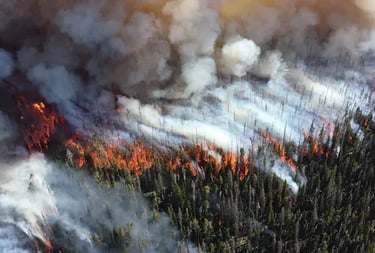
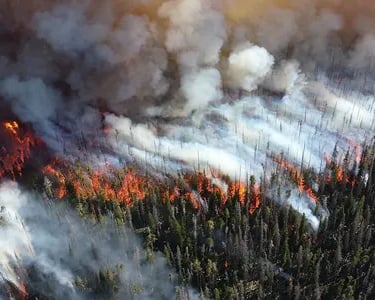
Wild Fires
Storms
Unrest
USA Bunker Company — America’s Leader in Premium Underground Bunker Construction
In a changing world, families, communities, and mission-critical organizations are increasingly seeking real solutions to stay protected and prepared. At USA Bunker Company, we don’t just build bunkers—we build long-term underground survival systems that combine military-grade security, off-grid power, engineering-level concrete structures, and comfortable living spaces designed for decades of safe use.
Our team has served on the front line of danger and disaster: combat operations with the 82nd Airborne Division in Iraq, active law enforcement roles, emergency management operations, and more than a decade of hands-on bunker construction experience. We apply what we’ve lived through to the environments we engineer. We do not build “fantasy shelters.” We build serious infrastructure designed to protect lives when it matters most.
Whether you are preparing for geopolitical instability, natural disasters, grid failure, or long-term self-sufficiency, we deliver the strongest, longest-lasting underground bunkers available in the United States and Canada.
Every bunker we design blends:
Military-grade defensive engineering
Reinforced structural construction
Off-grid power capabilities
High-end interior living features
Real-world survival planning
Our shelters aren’t novelty gimmicks.
They are mission-critical assets built to protect people when it matters most.
Real Experience. Real Training. Real Bunkers.
Anyone can sell you a metal box.
Very few bunker builders have real-world operational experience with danger, stress, or disaster.
Our background includes:
U.S. Army -82nd Airborne Division Combat Veteran
15+ years of active law enforcement experience
Emergency management training & disaster response
Building underground shelters and off-grid structures since 2012
Hands-on construction experience in concrete, steel, excavation, waterproofing, HVAC, electrical, and survival infrastructure
This matters because most bunker designers think about their structure from an architectural perspective.
We think from a survival perspective.
We know:
How air systems fail under pressure
What happens when drainage is wrong
Why electricity under stress behaves differently
How bunker residents think and behave under prolonged stress
What real threats look like, not theoretical ones
These aren’t design trends.
They’re lessons paid for in blood and experience.
Why We Build Using ICF — The Gold Standard for Underground Survival
After years of building hardened shelters, we have proven that Insulated Concrete Form (ICF) is the best foundation for a long-term bunker.
Unlike thin concrete or steel alone, ICF uses a structural sandwich:
EPS Insulation → Reinforced Concrete Core → EPS Insulation
This creates a monolithic structure that is:
Stronger under long-term soil pressure
Superior in energy performance
Quiet and thermally stable
Naturally fire-resistant
Highly waterproofable with correct systems
USA Bunker Company commonly builds ICF bunker walls achieving R-38+ insulation performance, far exceeding typical residential applications.
Practical Advantages of ICF Bunkers
1. Structural Strength
ICF walls behave like reinforced concrete armor.
They don’t have mortar joints like CMU block.
There are no seams to weaken or crack.
When buried, these structures handle:
Soil pressure
Ground movement
Freeze/thaw cycles
Water intrusion attacks
We’ve seen 10–20 year bunkers made of cheap steel or CMU fail.
ICF outlasts them all.
2. Stable Underground Temperatures
The earth wants to equalize temperature.
ICF keeps the interior comfortable with minimal mechanical energy.
In true survival events, this is everything:
Fewer HVAC cycles
Lower generator load
Longer battery life
Safer long-duration occupancy
3. Noise Isolation
When you don’t want attention, silence is not a luxury, it’s a defensive measure.
ICF dampens:
Outdoor noise
Mechanical vibration
Impact shock
Wind resonance
This is why ICF is used in government shelters, safe rooms, and hardened facilities.
4. Waterproofing & Drainage
With proper waterproofing systems, ICF becomes one of the most water-resilient underground structures available.
We utilize:
Integrated membranes
Drainage mats
Wall coatings
Positive water management
Sub-slab drainage plans
Geotechnical assessments
Soil pressure pathways
Water isn’t a maybe—it's guaranteed.
We design for it from day one.
Steel Bunkers — When Steel Is the Correct Tool
While ICF is our flagship system, we don’t force one solution on every client.
We build steel bunkers when the tactical or site conditions require it.
We specialize in two categories:
Galvanized Corrugated Steel Pipe (CSP) Bunkers
Excel in cylindrical pressure distribution
Ideal when buried deeply (10’+ soil cover)
Naturally resists soil movement
Lightweight and efficient to transport
Ideal for linear layouts and tunnel access
These are strong because the shape handles pressure, not because steel is “magic.”
¼” Structural Plate Steel Square Bunkers
We do not use flimsy sheet metal.
Our steel bunkers are engineered from true structural plate.
Advantages:
Incredible durability
Internal framing & cross-bracing
Modular design
EMP shielding capability
Rapid installation
Ballistic or armored entry doors
Custom electrical and plumbing penetrations
Steel excels when:
A client wants near-instant deployment
Modular tactical layouts are needed
A military-style environment is ideal
The property can’t accommodate concrete placements
We build real infrastructure, not “hunting cabin kits with a hatch.”
Swiss ANDAIR VA150 — True Premium Grade Air Filtration
Most DIY bunkers fail on the single most important system: oxygen security.
Cheap fans are not protection systems.
We install ANDAIR VA150 units — used in European civil defense bunkers.
Why VA150 Matters
Positive pressure system
NBC (Nuclear / Biological / Chemical) filtration
Designed for sealed environments
Proven in real bunkers, not marketing brochures
Long filter life
Anti-penetration airflow design
Positive pressure is key:
Clean air goes in → contaminated air cannot push inside.
This protects occupants from:
Smoke
Wildfire particulates
Chemical spills
Biological contaminants
Aerosolized threats
Low-oxygen environments
Forced gas entry
Your bunker becomes a sealed defensive vessel.
Luxury + Tactical Survival
A bunker is not just a panic vault.
It is a long-term refuge.
We design underground spaces that feel like homes, not cages:
Private bedrooms
Full kitchens
Bathroom with shower
Climate controlled HVAC
Entertainment zones
Gym and training space
Weapons vault / safe room
Long-term food storage
Water treatment systems
Tactical corridors & escape routes
When a family is underground, peace and morale are survival assets.
Long-Term Sustainability & Off-Grid Systems
We integrate:
Solar arrays
Battery banks
Diesel or propane generators
Hybrid power
Water treatment
Rain capture
Geothermal
Hydronic floor heating
Compost or pressure flushing systems
You don’t prepare for 3 hours.
You prepare for months—quietly and sustainably.
Custom Floor Plans
We build:
300–400 sq ft studio shelters
Small family bunkers
Luxury survival compounds
Multi-suite underground homes
Multi-corridor tactical layouts
Multi-level bunker systems
Every project begins with:
Your land
Your threat model
Your long-term goals
We then engineer the bunker around the human reality of survival.
Why Clients Choose USA Bunker Company
Combat-tested experience
Law enforcement operational exposure
Disaster response background
Underground construction since 2012
Real ICF bunker engineering
True steel bunker fabrication
Off-grid and tactical ventilation knowledge
We actually live what we build
You are not buying a box.
You are buying protection.
Prepare Today. Live With Peace Tomorrow.
You don’t install a bunker because you expect chaos.
You install one so you never feel fear when it arrives.
Inside America’s New Underground Living Movement: The Training, Engineering, and Philosophy Behind USA Bunker Company
In the early years of his military career, when he served with the storied 82nd Airborne Division, survival was not an abstract concept or a hobby. It was a daily negotiation with reality. The lessons learned in warzones—about stress, about breathing in dust and chemical smoke, about the way people behave when resources become scarce—do not fade when the uniform comes off. For some, those experiences become chapters of memory. For others, they become architecture.
That foundation is the reason USA Bunker Company exists. Its founder, a combat veteran who later spent over fifteen years in law enforcement and emergency response, never set out to become a marketer of fear. He is not interested in doomsday fantasies or apocalypse-themed internet subcultures. Instead, he builds bunkers the same way he approached missions: with a philosophy rooted in training, discipline, and the belief that lives depend on the integrity of every decision.
This simple ethos—“real people, real protection”—is why families, preparedness professionals, and even high-net-worth clients from across the United States now seek his company out. They are not looking for a novelty. They are looking for an underground home that can outlast chaos, accommodate their lifestyle, and quietly shelter what matters most.
The Making of a Builder: From Combat and Crisis to Construction
In the aftermath of military service, most veterans return to civilian life with skills that feel almost mismatched to their surroundings. They can assess threats, read tension in a crowd, calm panicked strangers, or improvise under fire, yet few industries ask them to do so. For the founder of USA Bunker Company, however, these skills were not burdens—they were design blueprints.
When he entered the world of construction, underground infrastructure projects were not a trend; they were a personal obsession. He built shelters not for internet forums, but for real clients with existential concerns: storm survival, personal security, privacy, energy independence, asset protection, or stewardship of aging parents. Over time, he realized something profound:
Most people do not understand what “preparedness” looks like until danger arrives.
Anyone can talk about resilience. Few know how to engineer it.
Through the years, he refined his craft, applying military realism to structural design: what if the ventilation supply is compromised? What if groundwater floods the foundation? What if a generator fails during the coldest week of winter? What if kids need psychological space to survive long-term isolation?
These aren’t architectural hypotheticals. They are lived questions from years spent responding to tragedies, emergencies, and threats. Eventually the work became its own path, and USA Bunker Company became not just a contractor, but a philosophy of underground living.
The New Generation of Underground Homes
To understand the company’s approach, you must first forget what most people imagine when they think of a bunker. The stereotypical image—corrugated tubes, stale air, dusty canned food—belongs to another era. Today’s elite underground dwellings are not about hiding in fear. They are about designing a private environment that remains comfortable when the outside world doesn’t.
USA Bunker Company’s projects are not made to impress YouTube commenters. They are built for families who expect their investment to actually save lives, not simply endure a few weeks underground. They draw on experience from countless environments: warzones, active shooter events, natural disasters, chemical hazards, and blackout conditions. They are shaped by the understanding that survival is not a sprint; it is a long, quiet marathon.
Every bunker starts with three questions:
Who are you trying to protect?
How long do you need to survive?
What resources do you control when society stops cooperating?
Only after those questions are answered does design begin. And that design—contrary to popular belief—is not simply about steel or concrete. It is about the lived experience of human beings in stress.
The Invisible Variables of Survival
The difference between a bunker that works and one that fails often lies in the details most people never think about.
Oxygen is the first.
People assume that a simple fan will keep air flowing. It won’t. Air pressure must be managed the way submarine engineers design compartments: you must stay positive. Positive pressure means the bunker expels contaminants rather than inhale them. Without it, smoke infiltration, dust, chemical vapor, or biological agents will creep between seals like fog.
This is why USA Bunker Company uses professional systems—most notably the Swiss ANDAIR VA150, a piece of equipment designed for European civil defense shelters. These systems do not simply move air; they preserve breathable environments in sealed spaces under threat. The VA150 is built for NBC events—nuclear, biological, chemical—and has quietly been saving lives for decades. It is not a “prepper toy.” It is infrastructure.
Water intrusion is another enemy.
Water is patient, unforgiving, and universally underestimated. When poorly designed shelters flood, they do not fill dramatically; they destroy slowly—through seams, pressure cracks, ground movement. Years later, mold becomes sabotage. Electronics corrode. Wall systems swell. People panic. USA Bunker Company treats geotechnical reality like a weapon they must defend against: drainage mats, layered membranes, pressure relief pathways, slab design, and soil displacement calculations.
Human psychology is the third variable.
It is easy to imagine survival as a heroic march—endless focus, stoic discipline, no fear. It is rarely that. Children get restless. Adults get angry. Water runs low. The smallest sound becomes a trigger. Space must be designed to maintain dignity, privacy, light, rest, and the basic rituals that make people human. USA Bunker Company understands this because its founder spent years watching people break under pressure and helping them regain control.
These insights separate a fantasy bunker from a livable underground home.
The ICF Revolution: Concrete That Feels Like Comfort
To build underground is to negotiate with physics and earth itself. For decades, the bunker industry has gravitated toward three materials: block masonry, thin steel, or corrugated tubes. These systems work—until pressure, moisture, or thermal stability eventually win. The founder of USA Bunker Company spent years examining these failures, testing alternatives, and refining what he believes to be the superior approach: Insulated Concrete Forms (ICF).
In simple terms, ICF is reinforced concrete poured into insulated foam panels, forming a monolithic sandwich of structure and comfort. The foam on both sides traps earth’s natural temperature patterns and creates thermal mass. The concrete core—supported by steel reinforcement—behaves like a hardened shield. The result is a space that remains silent, strong, and comfortable with minimal energy input.
Concrete alone is brute force.
Steel alone is reactive.
ICF is strategic.
Because the structure is continuous, there are no hollow seams to crack or mortar joints to fatigue. When a bunker must endure fifty years of soil pressure, shifting water tables, and freeze/thaw cycles, continuity is survival. The thermal benefit amplifies this stability. In long-term events, battery reserves last longer, HVAC systems run less, and ambient temperature remains humane.
The company often builds ICF shelters exceeding R-38 insulation performance, creating a barrier that insulates like a high-end home while behaving like a hardened defensive structure.
Clients who walk into ICF bunkers expect metal reverberation or cold, echoing chambers. They find the opposite: a calm, quiet, solid environment that feels permanent. The bunker is not a bunker anymore. It is a home below the surface.
When Steel Is the Right Answer
Despite their devotion to ICF, USA Bunker Company does not treat concrete as religion. There are scenarios where steel is the proper tool. Some clients want rapid deployment, modular layouts, ballistic entry systems, or tactical environments with expandable corridors. For this, the company builds using structural-grade plate steel—not thin sheet metal sold for novelty.
There are two notable approaches:
Corrugated steel pipe bunkers are cylindrical, distributing pressure evenly around their form. When buried with deep cover—10 feet or more of soil—these shelters are extremely resilient to earth forces, ideal for tunnel-style layouts, rural installations, or secondary access routes.
¼-inch structural plate square bunkers, by contrast, are engineered like armored vehicles. They stand where geometry or terrain demands rigid corners, framing, and welded infrastructure. Steel excels when tactical needs outweigh aesthetics. EMP shielding, ballistic resistance, compartmentalization, and fast deployment often point toward metal.
USA Bunker Company refuses to call this “better” than ICF. It is simply a different weapon for a different mission.
Living Underground: The Unexpected Luxury
Ask someone who has never seen a modern bunker what underground living means, and they will describe scarcity. Ask one of USA Bunker Company’s clients, and they will describe purpose.
The company’s projects include full kitchens, private bedrooms, spa-style bathrooms, entertainment rooms, gym space, secure vaults, and climate-controlled interiors. They are built to support solar, battery walls, diesel generators, geothermal loops, and advanced water treatment. Some clients request aquaponic systems, seed banks, or medical storage.
The most surprising commonality?
These bunkers are not designed for panic—they are designed for peace.
In crisis, survival is not glamorous. It is quiet. Families read books. Parents prepare meals. People sleep. Children ask questions. The bunker isn’t a fortress of fear; it becomes a sanctuary for the essentials of life. This is why USA Bunker Company builds with harmony in mind: warm tones, ergonomic layout, private rooms, ventilation pathways that are silent, lighting that supports circadian rhythms. Survival without dignity is misery. Survival with dignity becomes legacy.
A Company Built Around a Single Belief
Some builders talk about survival. Others have lived it. USA Bunker Company belongs to the latter.
Their shelters are not YouTube spectacles, influencer gimmicks, or prepper culture props. They are built by someone who has faced the worst moments people can experience—from war to disaster to—and still believes the world is worth protecting.
For clients across the United States and Canada, the message is simple:
You don’t build a bunker because you expect chaos every day.
You build it so you never feel fear when it arrives.
Underground living is not paranoia.
It is preparation.
And preparation is peace.

Saftey & Comfort
Emergency Building solutions With Comfort.
1-855-5BUNKER
(1-855)528-6537)
© 2024. All rights reserved. USA BUNKER COMPANY 2025